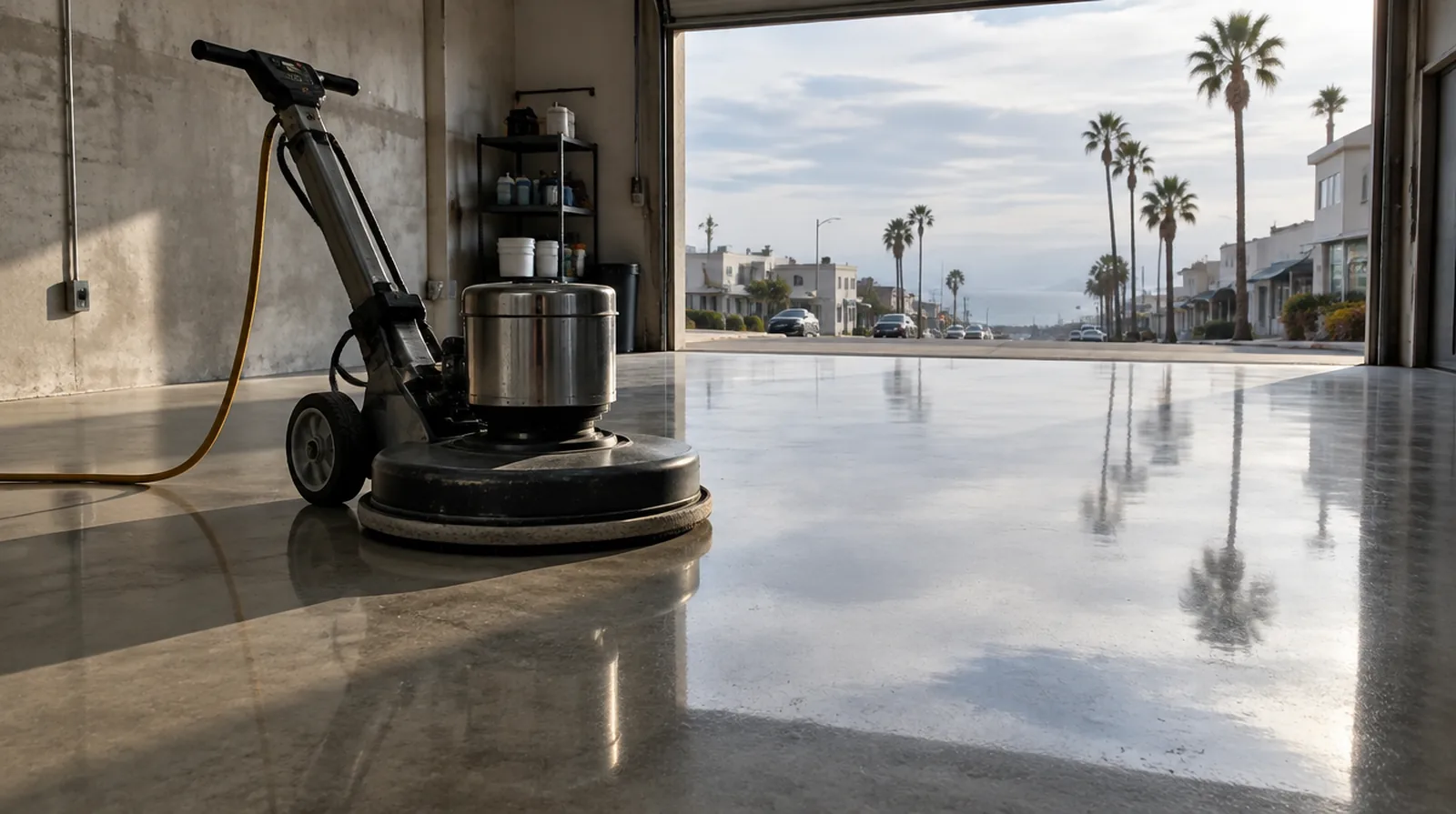
The process
We grind the slab with diamond tools in steps, apply a densifier to harden it and polish to the sheen you want. A guard finish helps resist stains.
Why choose it
- No coating to peel from damp slabs
- Hard surface that resists sand wear
- Simple cleaning
- A modern, open look
Where it fits
Retail shops, studios, offices and homes with open floor plans. Some homeowners polish a ground floor that opens to a patio.
What it shows
Polishing reveals the slab, including cracks and patches. If you prefer a uniform color, a coating may fit better.
Is polished concrete good near the beach?
Yes. With no film coating, damp conditions are less of a concern.
How do I care for it?
Dust mop regularly and use a neutral cleaner.
Indoor-outdoor living
A polished ground floor that flows to a sliding door and patio looks great in a beach home. Sand mats inside the door protect the shine.
Restaurant dining rooms and retail
A polished floor in a dining room or shop near the pier gives a relaxed, coastal feel and handles sandy shoes better than tile with grout lines. We can add a light stain color during the process for a warmer tone that complements wood tables and white walls.
Polished concrete for beach homes and businesses
Polished concrete pairs well with the indoor-outdoor living common in Redondo Beach. It is durable, easy to clean of sand and has no coating to peel. It suits ground-floor living spaces, restaurants, retail and offices.
Polished concrete questions
Will sand dull it? Over time, yes. Mats and daily dust mopping help, and a burnish restores shine.
Is it good near the beach? Yes, indoors. Exterior polished concrete can be slick when wet.
Can it be colored? Yes, with dyes.
How we polish
We grind with coarse diamonds to flatten and open the slab, fill cracks, apply a densifier to harden the surface and refine through finer pads to the sheen you choose. A guard sealer finishes the floor. Vacuums capture dust as we go. Satin suits busy restaurants and shops; higher gloss makes an impression in a living room with ocean light pouring in. Dining rooms and boutiques in Riviera Village like polish for its clean look and easy nightly cleaning.
Timeline
Two to four days for most rooms.
Polished concrete for cafes and shops near the water
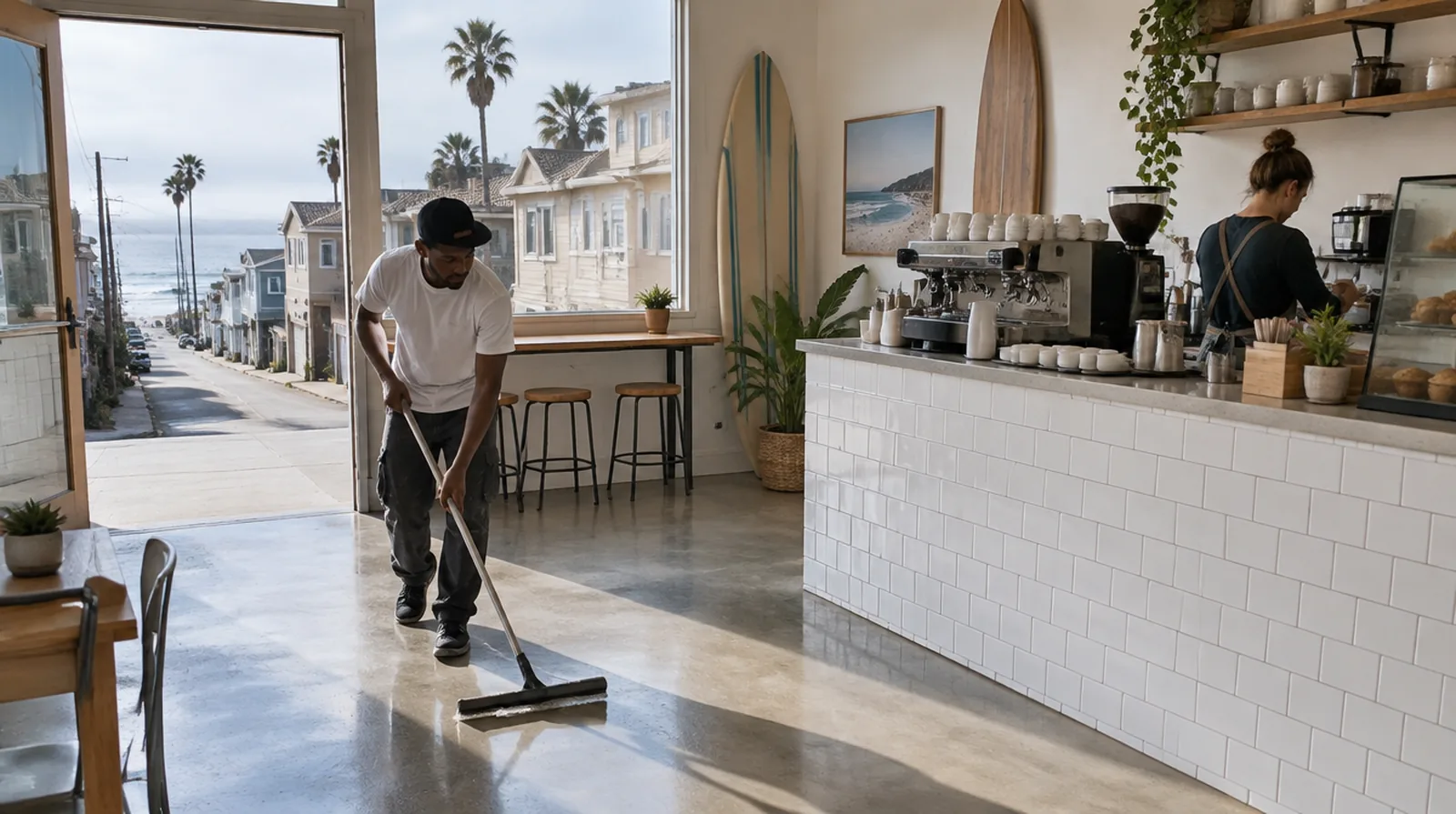
Coffee shops, bakeries and boutiques in Riviera Village and along the harbor see a steady stream of customers who have just walked off the beach or the Strand. Sand and salt come in on every pair of shoes. Polished concrete suits these spaces because it is hard, dense and easy to sweep, and its light-reflecting finish keeps a small shop feeling open and bright.
Many storefronts here are in older buildings with slabs hidden under vinyl or tile. Once the old flooring is removed, we grind away adhesive and patches, fill cracks and step through progressively finer grits. A densifier hardens the surface, and a guard adds stain resistance. The final sheen can be anything from a soft satin to a high gloss.
We also look at the entrance threshold, where the slab meets the sidewalk. Older storefronts often have a worn or uneven lip there that is worth grinding smooth before polishing so carts and strollers roll in easily.
Sand is the main enemy
Beach sand acts like sandpaper on any floor. On polished concrete, regular dust mopping and walk-off mats at the entrance keep the shine from dulling in the main traffic path. A periodic burnishing pass restores the gloss when needed.
Color and character
Dyes can warm up a gray slab with tan, sand or soft brown tones that fit a coastal interior. Some owners prefer to leave the natural aggregate and old saw cuts visible for an industrial look.
Polished concrete question
How long does polishing take for a small cafe? Most small storefronts take a few days, scheduled around closures or overnight.
Do spilled drinks stain a polished floor? A guard slows staining, but coffee, wine and citrus should be wiped up promptly to keep the surface looking even.
Ask about polishing your slab
Call (424) 499-1579.