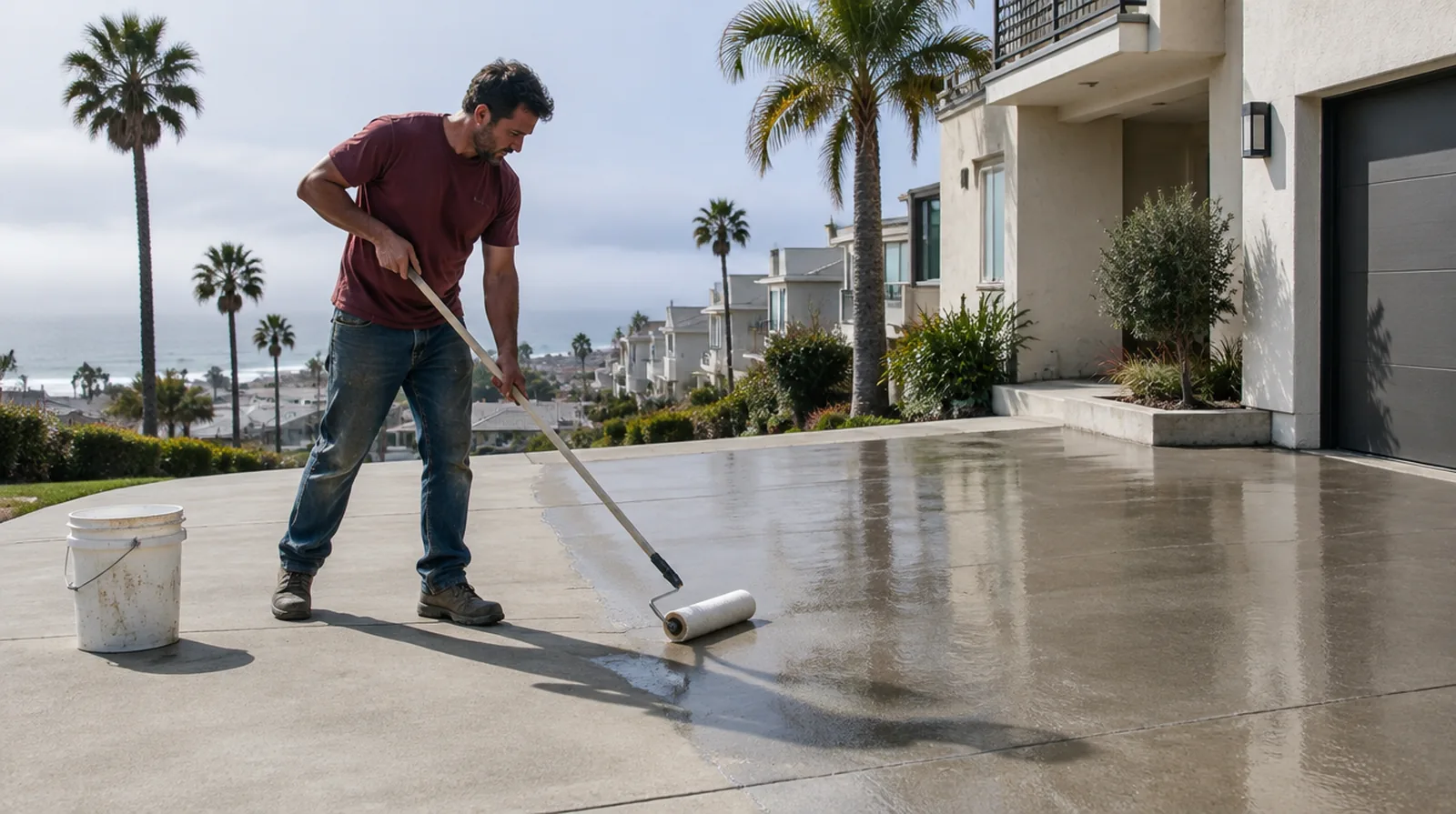
Why seal near the ocean
Salt from ocean air settles on outdoor concrete, and moisture carries it inside. Over time, that can lead to surface scaling and staining. A penetrating sealer reduces water and salt absorption.
What we seal
- Patios and upper-level decks
- Driveways and walkways
- Pool and spa decks
- Stamped and colored concrete
Our process
We clean the concrete, remove salt and stains, let it dry and apply sealer evenly.
How often should I reseal?
Near the beach, every couple of years is common.
Will sealer make it slippery?
Penetrating sealers do not. Topical sealers can include grit.
Upper decks and balconies
Some newer Redondo homes have concrete balconies or upper-level decks with ocean views. Those surfaces take full sun, wind and salt spray. We check drainage, clean the surface and apply a breathable sealer that will not trap moisture. If there is a waterproof membrane underneath, we confirm the sealer is compatible before we start.
Garden walks and side yards
Narrow side yards between homes stay shaded and damp, which can lead to moss and dark stains. Sealing after a thorough cleaning slows that growth and makes the next cleaning easier.
Sealing concrete in salt air
Salt carried on the ocean breeze settles on driveways, walkways and patios across Redondo Beach. Combined with morning moisture from the marine layer, it slowly works into bare concrete and can lead to surface wear and rust stains where rebar sits close to the top. Concrete sealing in Redondo Beach slows that process and keeps sand, sunscreen and grill grease from staining.
Questions about sealing
Can you seal a rooftop deck? We can seal concrete decks; we will check drainage and existing membranes first.
Will sealer help with rust stains? It slows water and salt from reaching steel. Existing stains may need treatment first.
How often should I reseal near the beach? Every two to three years for exposed surfaces.
Is it slippery for bare feet? We keep texture or add grit on pool and shower areas.
How we seal
We rinse off salt and sand, degrease and treat rust or mildew, then wait for a dry afternoon so the slab can dry out after the morning marine layer. Sealer goes on in even coats by sprayer or roller. On decorative or colored concrete we test a small spot first so you can approve the look. We protect plants and siding and clean up when we finish.
Sealing patios, decks and walkways in the salt air
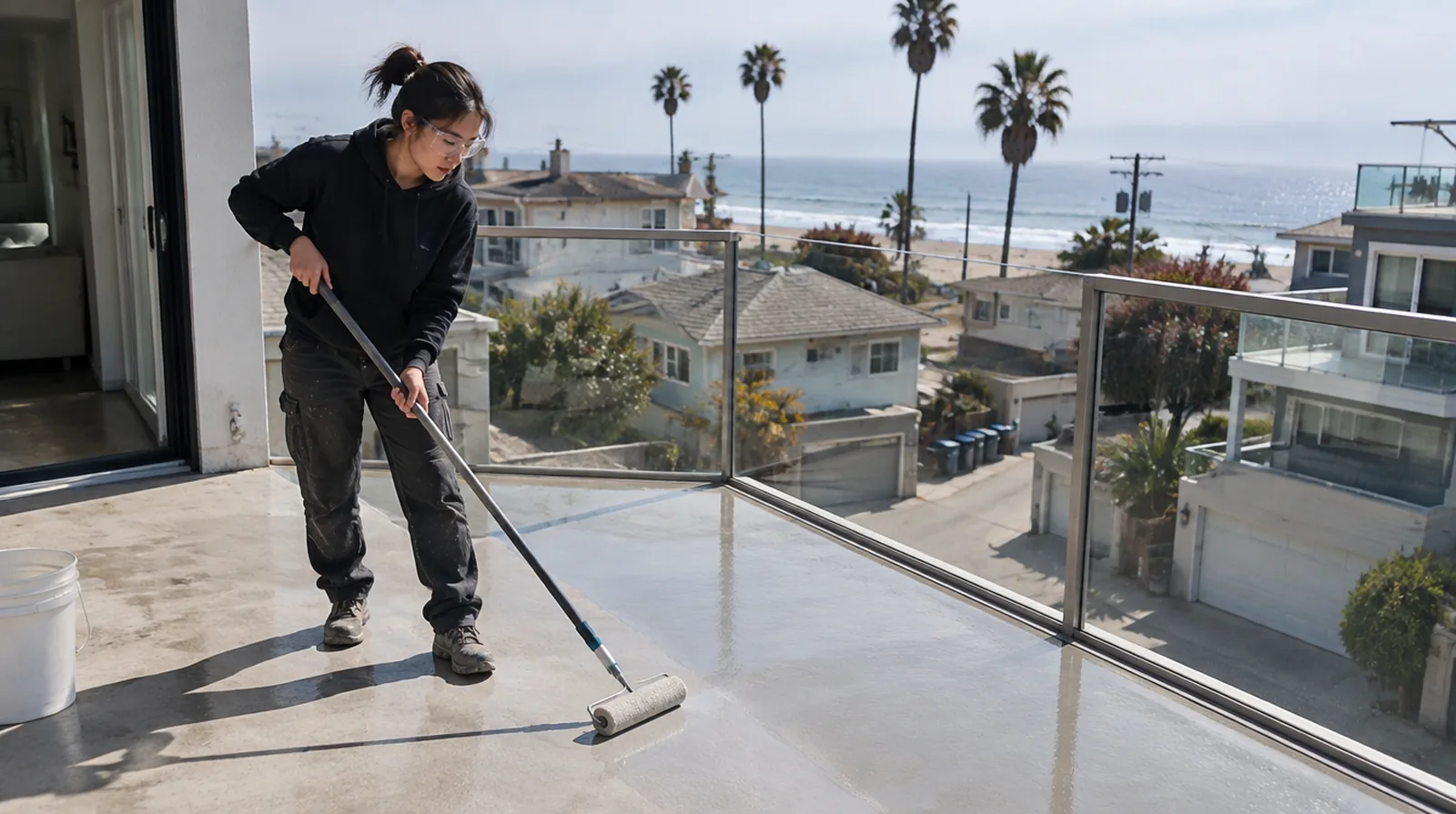
Outdoor concrete near the beach lives in a harsh setting. Salt spray, morning fog and the occasional winter storm keep patios, walkways and rooftop decks damp for long stretches. Over time, salt works into the surface and begins to break it down, leaving a rough, sandy texture and white mineral bloom. A penetrating sealer slows that process by limiting how much salt water the concrete can absorb.
We start by washing the surface and removing any failing sealer, efflorescence or stains. Once the concrete is dry enough, the sealer is applied evenly with a sprayer or roller, paying close attention to edges along glass railings, stucco walls and planters. On patios with a view, we keep overspray off glass and railings.
Penetrating or film-forming?
Penetrating sealers leave the concrete looking natural and keep their grip when wet, which matters on patios and pool decks. Film-forming sealers add a sheen and deepen color, but they can be slick and need more upkeep in a salty setting. For most coastal patios we suggest a penetrating product.
Sealing driveways and alley aprons
Driveway aprons and alley-facing slabs take sand and salt from every car that pulls in. A sealer there helps the concrete shed water and keeps stains from setting.
Sealing question
How often does coastal concrete need resealing? More often than inland concrete. We usually suggest checking each year and resealing every few years, depending on exposure.
Will sealer change the color of my patio? Penetrating products barely change it. Film-forming ones darken it slightly and add a sheen.
Protect your outdoor concrete
Call (424) 499-1579.